Monday, October 21, 2013

Eid Al-Kabir : Time to Celebrate

This past week we celebrated the most important holiday on the Islamic calendar.  One of the reasons I wanted to live abroad was to fully experience a new culture, and this holiday was the pinnacle of cultural experiences.  Before you read too far, please take note that there will be a handful of graphic photos below.  If you are uncomfortable seeing a sheep being slaughtered, this blog post might be one for you to skip.

The weeks leading up to Eid al-Kabir in our town sort of felt like the weeks leading up to Christmas back in the US.  Shops were much busier, relatives came home for the holiday, and there was a special sort of energy in the air.  One major difference?  Every family had a sheep up on their roof, and the sound of the sheep bleating all day and night sounds a little different than holiday music at the mall.

Our family's sheep.  Baaaa-utiful.

And then, as each family commemorates the story of Abraham, Ismail, God, and the sheep, the soundtrack suddenly stops.  After watching morning prayers from our roof, we hurried over to our host family’s house.  There, we waited for the butcher.  Each family in town has their own sheep to slaughter for this holy day, and so the butcher is a busy man.  Us gals passed the time by cleaning and dancing.  The boys watched TV. 

When the butcher arrived, we headed up to the roof and said our last words to the sheep.  Our host mom filled his mouth with spices, a quick prayer was offered, and the butcher got to work.  Perhaps it is because we’ve grown accustomed to seeing our chicken killed in front of us before we take it home to cook it, but the actual slaughter was not too difficult to watch.  The butcher, skilled in his craft, completed the deed in under 20 minutes.  The sheep was mercifully killed, skinned, and cleaned before I could fully process what was going on around me. Its liver was thrown on the grill, its blood cleaned off the ground, and its internal organs removed and rinsed while we played with settings on our camera.


Slipping spices into the sheep's mouth. Distraction technique?


Our host brother and the sheep.

Looking a bit like lace, a sheet of fat was hung up on the clothesline to dry while the liver was grilled.  Before I could protest, the sheet of fat was placed in my hands so that I could begin the work of crafting boulfaf, kebabs made of liver wrapped in fat and coated with spices.  The kebabs, perhaps the closest thing to bacon we’ve had in a long time, were delicious.  As was the lamb tagine we had for dinner that night. And the lamb tagine we had for lunch the next day. As, I’m sure, will be the lamb tagine we eat for lunch today.


Host cousin and I making the kebabs.

It's much more fun to bbq inside the house.

Pete and our host brother enjoying the first bites of the sheep.

The rest of the day was spent much like any big holiday in the US.  We passed the afternoon by eating lots of food, watching TV that we were not particularly interested in, wondering how we could help our hostess.  Oh, and looking out the windows to see the Harma chasing kids in the street.  But that’s a whole other story.

Eid al-Kabir was a good day.  Our host family treated us with such kindness and generosity, and we felt grateful to be part of their intimate holiday celebration.  Morocco is a lot of things; most notably for me, Morocco is a constant lesson in hospitality. When we return to the US, I hope to invite people to our roof to watch us slaughter an animal and then share all the various parts with them.  Wait, no.  I just want to be a kinder, more generous person, in whatever form that might take. 


Wednesday, October 16, 2013

Eid Al-Kabir: From the Roof

In a few minutes, we'll head over to our host family's house to celebrate Eid with them.  But before the craziness of the day commences, we had a cup of coffee on the roof and watched our community gather for prayer.  The soccer field turned into sacred grounds this morning as people in our town gathered to sing and pray.  It's hard to see in this video, but here's a 360 view from our roof so you can get a sense of how lovely the morning looked.  In addition to chanting, you can also hear all the sheep in town singing their last song.  Eid Mubarak!


Monday, October 14, 2013

Countdown to Eid Al-Kabir!

Fall is slowly arriving here.  Too slowly.  But we are grateful for the cool nights that lead to brisk mornings, and we savor the fall feeling with cups of pumpkin spice coffee (thank you Jen!) and wait in dread for the sun to shine and make our lives hot and sweaty.

Enough complaining about the sun, though.  I wanted to show you what fall in our town looks like.  More specifically, what this week in our town looks like.  We are in the final countdown to a very large holiday, and our town is brimming with energy.

If you'd like a soundtrack to accompany you as you continue reading, be sure and click this link and you'll hear what the weekly souk (market) in our town sounds like.  


Why are market sounds so important?  Imagine it's a few days before Thanksgiving, and you have to run out to the grocery store to buy everything you need for the big feast.  The store is crowded, of course, as it always is before a big holiday.  Then imagine that your grocery store is outside.  So there are cars driving through it while people chitchat and argue over prices.  And then, imagine that you actually have to buy a live turkey, bring it home, care for it for a few days, and then slaughter it yourself.  Now, imagine that every other family is doing that, too.

Except, swap out the turkey for a live sheep.  Because it's Eid Al-Kabir, y'all, and our town is almost ready to celebrate.  So, when you see this outside:


It's safe to assume that this hay is not actually going to a hay ride.  Instead, it's going to feed the sheep until it's time for the sheep to meet his maker.  In fact, this sheep and his goat friend are actually right on top of the van, too.

And when you see something like this:


Rest assured that these boys aren't going to the local petting zoo.  They are making their way to families eager to grill some boulfaf.

And, lastly, when you see something like this:


Know that it's not as innocent as it looks.  I'm scoping out Wednesday's lunch.  Am I heartless?  Maybe.  Am I protein-deprived?  That's more likely.

Every Monday, our town has an animal souk.  People from the small villages surrounding our town come down to sell and purchase livestock.  Today's animal souk was the largest I've ever seen, and the animal exchanging spread into the streets. How many sheep can you spot?


Every Moroccan we ask claims that Eid Al-Kabir is their favorite holiday.  The excitement in the air is palpable, and our friends keep asking if we are going to buy our own sheep (the answer is "no."  I thought the giant hook placed precisely over the floor drain in our courtyard was for flowers).  Our host family is excited for us to spend the day with them, and we're grateful to be spending this special holiday with people who have cared for us so kindly.  

We'll be sure to share more stories and photos once the big day passes.  In the meantime, know that we miss you.  A lot.

Tuesday, October 8, 2013

Guide for climbing Mt. Toubkal for those who are reasonably fit and reasonably motivated but not extremely fit or extremely prepared.

I know it’s a long title, but I wanted to make it very clear: this is not a guide for pros.  This is a guide for regular people, people who go on walks from time to time, people who like trail mix, people who think, “Yeah! Maybe I could give climbing Mt. Toubkal a go!”

Mt. Toubkal is, allegedly, the tallest mountain in North Africa.  Our little town is in the foothills of the same mountain range as Mt. Toubkal, and so it isn’t too far from where we live.  It is a popular place for trekkers, both foreign and domestic.  Before beginning our ascent, Pete and I read a lot of articles online claiming that anyone who is “reasonably fit” and “reasonably motivated” can tackle Mt. Toubkal.  So when our friend Kate came to visit, we thought it was the perfect opportunity to explore the mountain.  Online articles reported pleasant climbing weather in September, and we have hiking shoes and backpacks and Cliff Bars.  Perfect!

On day one, we hiked from the charming town of Imlil (where the trail begins) to the Toubkal Refuge.  According to the interweb, this walk should have taken us between 4.5-7 hours.  It took us every minute of those seven hours, and altitude sickness made the last few hours fairly miserable.  We spent the night at the refuge and hit the trail to the summit at 6:30 the next morning.  Nine hours later (again, much, much longer than it takes the average hiker), exhausted and frustrated but also proud, we returned to the Toubkal Refuge.  We spent the night there again.  Not everyone does this, but we just couldn’t imagine walking all the way back down to Imlil.  I’m glad we rested because our early morning hike back to Imlil the next day was cool, quiet, and beautiful.  Because we weren’t exhausted and cranky, we were really able to enjoy the beauty of the mountains.


Looking back, here are ten-tips for hiking Mt. Toubkal that I wish I had known:

1.  Nothing is as close as you think it is in Morocco.  As the crow flies, our town is practically in Toubkal’s backyard.  And yet, we still have to trek into Marrakech and then back out via a different road to get to the city closest to the trailhead.  Hours and hours of uncomfortable rides in squished taxis and bargaining with taxi drivers can make one grumpy.  And that summit?  MUCH further away than you think.  MUCH.

2. Mt. Toubkal is actually located in a national park.  But it’s not Yosemite, y’all.  Directional signs are impossible to find, and the trails are poorly maintained.  Bring a map and brush up on your Darija vocab for “lost” and “please help me.”

Excuse me, but can you tell us where the mountain is?
3. People might not help you.  Part of the local economy stems from foreigners who hire guides to help them navigate the mountain.  And some people even hire a donkey to take their supplies up.  So, if you don’t, if you are trekking alone and ask for directions, it’s possible that a local will simply refuse to help you.  We tried our best to charm everyone we met with both Darija and Tashelhit, but a few people just said “no.”  Or, they may say, “Give me 50 dirhams” and you will scoff at the injustice but eventually hand over 20 just to avoid dying in the cold, alone.

4. Plan to spend more money than you expect.  Carrying water is hard work, and they do sell it at the Toubkal Refuge.  You have to decide if it’s worth it to shell out twice the normal cost for a giant bottle of water or if you’d prefer to lug up several gallons on your back.  Want coffee in the morning?  It’ll cost you 10 dirhams for a glass of hot water, instant coffee, and powdered milk.  Keep in mind that all the refuge goodies have to be carried up by donkey.  But, still.  It stings a little bit.

Grateful for water, no mater how expensive.

4   5. Dress appropriately.  It gets really, really cold out there.  I ended up tying an extra tank top across my face to block the wind.  I wore a baseball hat to block the sun on day one, and I wore a wool cap to prevent frostbite on day two. It’s been said before, and I’ll say it again: wear layers.

Layers!!
     6. Altitude sickness is real.  And it’s awful.  Symptoms we experienced included fatigue, lack of appetite, headaches, shortness of breath, and (my favorite) general malaise.  My hands also swelled quite a bit, making my fingers look like little sausages.  Luckily, our symptoms were not too severe.  We made it to the summit, but you need to listen to your body and be gentle with yourself if altitude sickness rears its ugly head.

     7. Other people are going to be a lot faster than you.  We encountered people who flew from across the world JUST to climb Toubkal.  We met a man who was hiking Toubkal as training for an upcoming hiking trip in Nepal. There are some serious people on that mountain.  It doesn’t matter how slow you climb as long as you are safe and having a reasonable amount of fun.  Stop comparing yourself to other people and just do what you can.

A pace that works for us.
     8. Bring what you need to get a good night’s sleep in a room full of 25 bunk beds.  Its kind of fun to go to bed at 7:30pm at the Toubkal Refuge the night before you climb the summit.  It made me feel like I was sleeping at Everest Base Camp.  With lots of strangers who snore and have altitude-induced flatulence.   You may need earplugs and a pill to help you sleep soundly.   I did.

     9. Mountain climbing is not the same as hiking.  And I now know that I prefer just regular hiking.  Maybe that’s common sense, but it didn’t really sink in for me until we were gripping steep slopes with white-knuckles and then sliding back down on our bottoms.

     10. An unreasonable amount of determination can get you very, very far.

13,671 feet, fueled by the power of love.

Whether or not you make it to the top, spending time in Toubkal National Park will provide you with stunning views of Morocco’s landscape.  While these tips would have been helpful for me, they are by no means an official guide.  Do you research, be prepared for anything and everything, and trust yourself.  Trek Salama!


Saturday, September 28, 2013

friends make everything better


My last three journal entries start like this, no lie:


Kate is here!


Kate is here!


Kate is gone. :(


My college-friend Kate could not have visited at a more perfect time.  Cooler weather has finally arrived, and Morocco seems friendlier and more beautiful because of it.  It was the perfect time of year for camel treks, mountain climbing, and souk shopping.  But, more importantly, she came at a time when I really needed a friend.  Morocco has been tougher than I expected in so many ways.  Kate came, she listened, she encouraged, and she helped us see Morocco with new eyes.  For a few weeks, we were able to be tourists exploring new places instead of volunteers hiding from the heat in our home.  She also brought a bag full of American goodies: giant jars of peanut butter, bacon crumbles, candy, Nyquill, and a few adult brownies from Andronico's in Berkeley.  She's the best.

In a handful of photos and stories, here is what our past few weeks looked like:

First, we spent a few days in our little town so Kate could experience first-hand Moroccan hospitality and food.  Our Moroccan friends loved Kate, they couldn't get enough of her.  Her very first night in Morocco, we went on a walk around our town to help her get an idea of where we live.  But, 10 minutes in, we were invited over for tea, for henna, for socializing---- we never made it past the closest neighborhood.

1st night in Morocco.  Henna!

I taught Kate how to make msmen on our roof.  In the dark. With this classy headlamp.

After a few days in town, we headed into Marrakech for the day.  Fueled by mechoui (slow roasted lamb.  worth it.), we explored the Dar Si Said and shopped in the medina.  Fellow PCV Sarah and her friend joined us for dinner in the Jemaa el-Fna.  We went to bed early, though, because the next morning we departed for a weekend trip to the desert.

Dinner in the Jemaa el-Fna
It took two days of driving to reach the sand dunes of Merzouga.  Two days of tourist traps, over-priced food, car-sickness, and a few hours of “will we be able to cross this flooded road, or are we going to have to turn back??”  Two days of road-tripping (with a Moroccan driver and 15 other tourists) through beautiful gorges and valleys.  We made it in time for a sunset camel ride through the Sahara desert.  It was thrilling to finally be doing something that other people who visit Morocco on vacation always seem to do.  My only regret about our trip to the desert is that I wish we could have stayed longer.  By sunrise the next morning, after an evening of tagine and traditional music, we were back on the camels for a two-hour trek to the van.  And a thirteen hour day of driving.

Being tourists in Morocco.
Turbans are a requirement for camel riding.

Yup. Worth the drive.


We hardly had time to recover before Kate and I were off to Essaouira for a quick girl’s trip.  Whenever I ask a friend to name their favorite city in Morocco, whether they are fellow Peace Corps volunteers or local Moroccans, Essaouira is the city most frequently named.  We ate seafood right out of the Atlantic, enjoyed strolling through the old medina, and appreciated some quality girl’s time.  I’m not sure if it is my favorite city, but it’s certainly a contender.


Picking out our lunch.
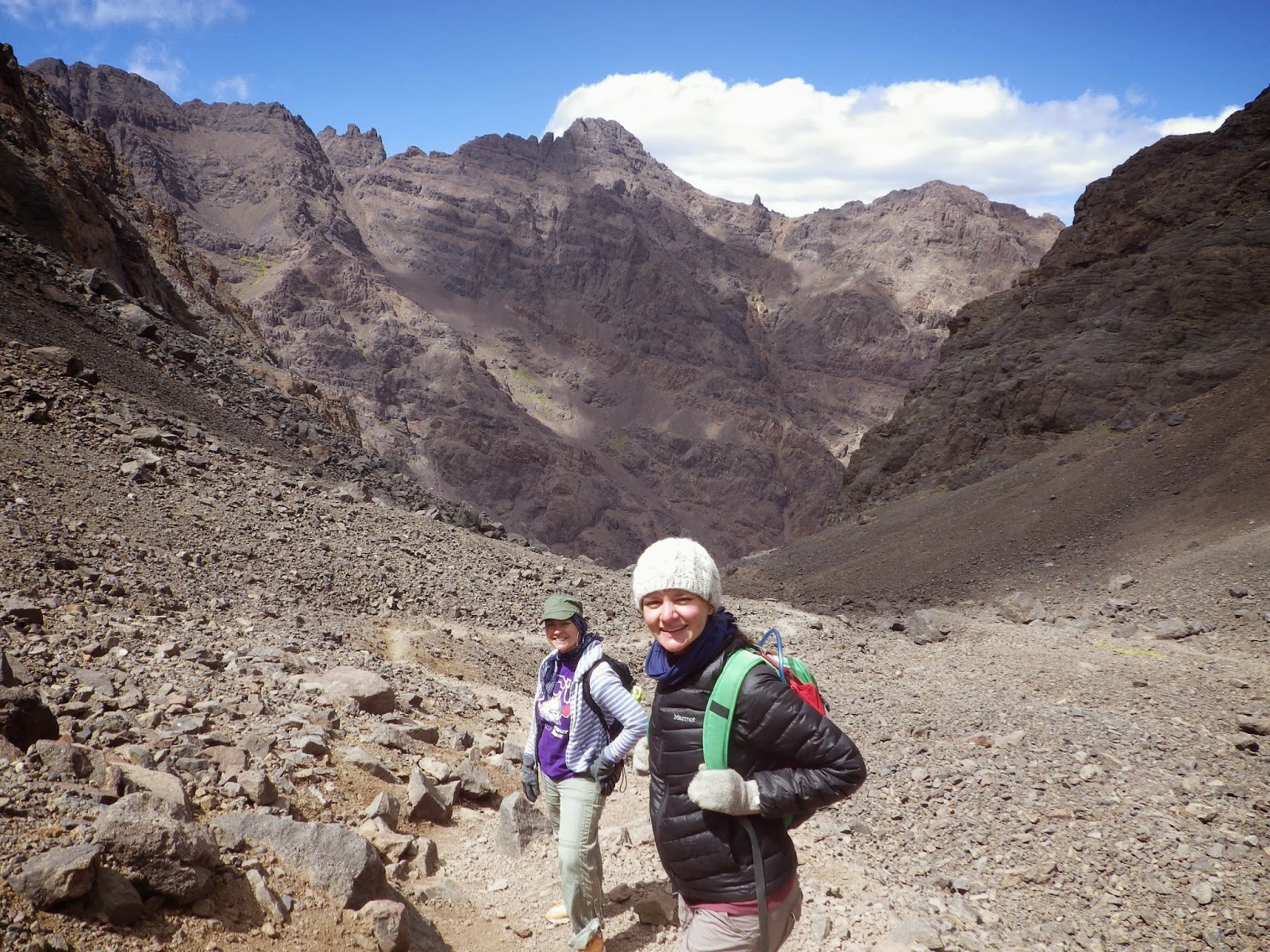
Next up came the most challenging part of our trip, the long weekend that cemented our friendship and dedication to adventure: climbing Mt. Toubkal.  I had read that September is a great month for hiking North Africa’s highest peak, so I casually mentioned to Kate, “Hey!  Pack some sneakers or hiking shoes!” before she came.  We both read that anyone with reasonable fitness and reasonable determination can manage the hike. Whoever wrote that is a liar.  The mountain showed Kate, Pete, and I that we must be far from reasonably fit.  Somehow, we summoned an unreasonable amount of determination from our inner reservoirs to make it to the top.  It’s possible we were the slowest people on the mountain the day we reached the summit.  But, please, re-read that part: We. Reached. The. SUMMIT.  And, along the way, we were stunned at how beautiful the Atlas Mountains are.

Toubkal summit: 13,671 feet.
Wait, we were up there?

Can you spot us?

After a few more days in our little town to recover, to visit with friends, and to pack up our bags one last time, the three of us took the train for a quick trip to Casablanca.  There, we visited the Hassan II Mosque (stunning), dined at Rick’s Café (so much fancier than we expected!), and enjoyed being anonymous in a big city.

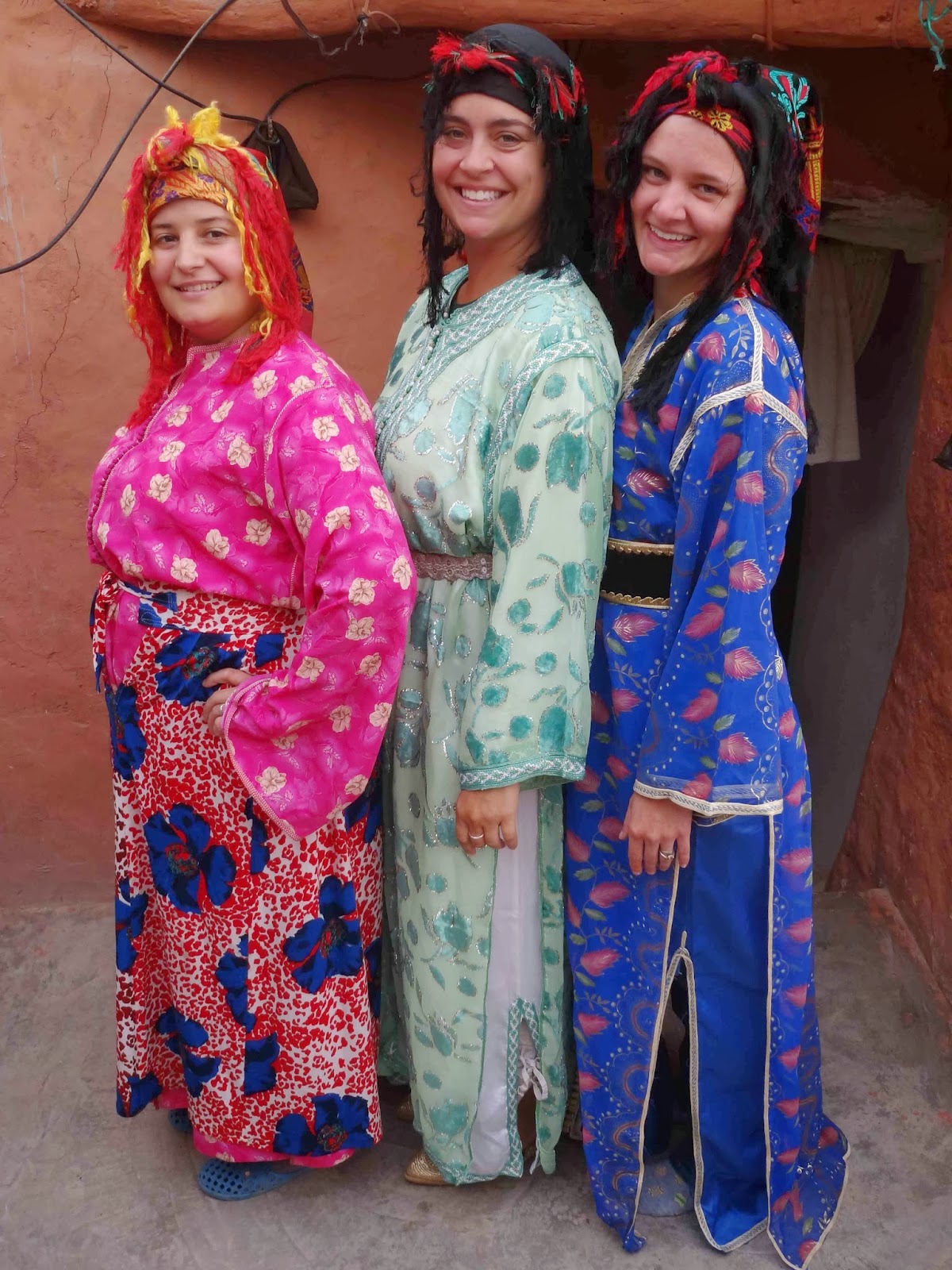
No trip to Morocco is complete without dressing-up in Berber wedding clothes.

Becoming a little more Moroccan (and, clearly, a little more crazy) everyday.

And then, as quickly as she arrived, she was gone.  With tears in my eyes, I waved at Kate in the train and wished that I was going back to America with her.  No doubt, Morocco has shown its best colors to me over the past few weeks.  But the pain of being so far away from the ones I love most is very, very real. 

To read more about our time together, be sure and check out Kate's blog.  She's included a lot more stories and photos, and it'll give you a better look into just how awesome she is.

Monday, September 23, 2013

Where You Can and Can't Go

Attending a host country national wedding might be the archetypal Peace Corps cross-cultural experience: a distillation of your privileged intimacy with host country nationals, the exotic foreign customs you long to write home about, and the pure joy by which you will transform your entitled, world-weary soul. 

While Britt worked at camp last month, I walked up the dry river bed leading out of town with a few friends, cone of sugar in hand and shirt tucked in (the best I can do on short notice), to a nearby village for my first Moroccan wedding.

We arrived early in the afternoon to the groom's house and immediately split up by sex. I can't speak for the women, but the men ate a mysterious -but not unappealing- plate of organ meat and gravy and afterwards coached me as I made tea for the room. Next, we napped up in preparation for the evening.

Not doing it right, no doubt.

The wedding was described to me as "Meya-F-Meya Amazigh". Loosely that is: a 100% traditional Moroccan mountain village wedding. Not city-fied or not Arabized (in ways that I would never be able to detect). Still,in the singing and dancing and staggered meal service there was some easily-identifiable shared DNA between Moroccan and American weddings.

Can you honestly tell this is wedding is in Morocco and not Austin?
And watch this clip to the end and you'll see that I'm capable of dancing badly at a wedding on any continent.


Then there were some more unusual customs, like the collective pause midway through the wedding to announce the precise amount of each gift, down to the last centime, given by every guest at the wedding. My friends assured me that my cone of sugar would not be announced; real gifts (money) only. If the design is to shame people into generosity, it certainly worked on me: I shelled out at the next wedding.


Halfway through the night I wondered aloud when the bride would arrive. A chorus of drummers and chanters had played the groom in two hours earlier and her entrance was sure to be a show-stopper. Except she wasn't coming. "She's in the house waiting for her husband," my friends told me, "Alone."  Taking the tradition of the bride and groom not seeing each other before the wedding to its logical extreme, the bride doesn't see anyone on the wedding day, until the groom comes back from the party.


The night ended ended with mint tea and a 3am bowl of harira, and we walked back home in the dark. Whatever fun I'd had turned to tired grouchiness on the long slog home, but I decided to stay awake anyway to watch the sun come up from our roof.


Spot the stork!
A week later, Britt was back from camp and we were going to another wedding with our friends. The night promised to be a bit more modern, a bit more urbane. For one thing the bride would be there, and we'd get to see a few of her famed outfit changes throughout the evening.
 

Still, the first thing we did after we met up with our friends was split up; Britt went with the women and I went with the men. We ate dinner on the roof while the women waited downstairs for their turn. Later we sat on plastic chairs set up around a stage, maybe thirty yards apart. Close enough that we could see each other, but not close enough to hear each other over the noise.


Britt and a friend before they were whisked away.
The evening provided a good show -a typically Moroccan too-long-by-half good show- with some very impressive dancers who carried the bride and groom around on a little throne, and a wait staff that somehow incorporated pyrotechnics into serving tea.  


That it turned into an endurance test didn't surprise me; what surprised me was how hard it was to enjoy. I kept thinking of our wedding day -without fear of cliche, I'll call it the most fun I've ever had in my life- and of the bride who had to wait alone in the house, and of how much richer my life has been for the many spaces I'm able share with women. In theory, it's a very intimate thing to attend a stranger's wedding, but in practice you're the stranger. People can invite you anywhere, but you haven't arrived at the place of intimacy until you feel at home. 

Four in the morning. Home at last.
 

Monday, August 26, 2013

Artisan Camp

Confession: several months ago, when fellow PCV Sarah asked me to help her with a camp this August, I was hesitant. And yet, despite our tough experiences with spring camp, she managed to convince me to participate.  "It's all girls!" she explained. "And it's art camp!"  I'm glad she did.  After ten-days in a room with 50 or so campers eager to learn and play and color, I'm pleased to admit that this was my best camp experience yet.

PCVs on kitchen duty.
My friend has a great blog with a great post about this camp that she organized, so I'll just share a few stories from my perspective.  She works with a group of artisans in her site, and it was the local artisans who initially came up with the idea of a camp for girls in the community.  For months, they worked together to put together a summer camp that would, from 9am-5pm, teach girls traditional Moroccan artisan skills: Fesi embroidery, 3la 7sab embroidery, crochet, and basket embellishment.  She also arranged for guest speakers from the community to come lead workshops with the girls about all sorts of things.


In traditional camp fashion, the days events didn't always follow the written schedule.  Speakers dropped out, but the girls kept crafting.  Lunch was hours late, but the girls kept crafting.  It was impressive to see 10-year olds occupy themselves for hours with a needle and thread.  They barely stopped to drink their tea and eat sweets during breaks, and that is saying something.

Heather, former PCV and founder of Mushmina, came to visit and chat with the girls.

These baskets will be made into handbags.
In the Peace Corps, I find that I'm frequently considered an "expert" on things that I have little experience with.  Case in point: each morning at camp, we had about an hour of exercise class with the campers, and all of us volunteers took turns teaching what we know.  For the first time in my life, I assumed the role of ballet teacher.  This meant a good 20 minutes of stretching to Taylor Swift followed by a basic introduction to ballet barre exercises (without the barre).  After, I showed the campers clips from Swan Lake.  I was sore for days after that first ballet class, but it was super fun to see them try and plie.  It was even more fun to see them watch in wonder the Danse des Petits Cygnes.

Ballet with Britt
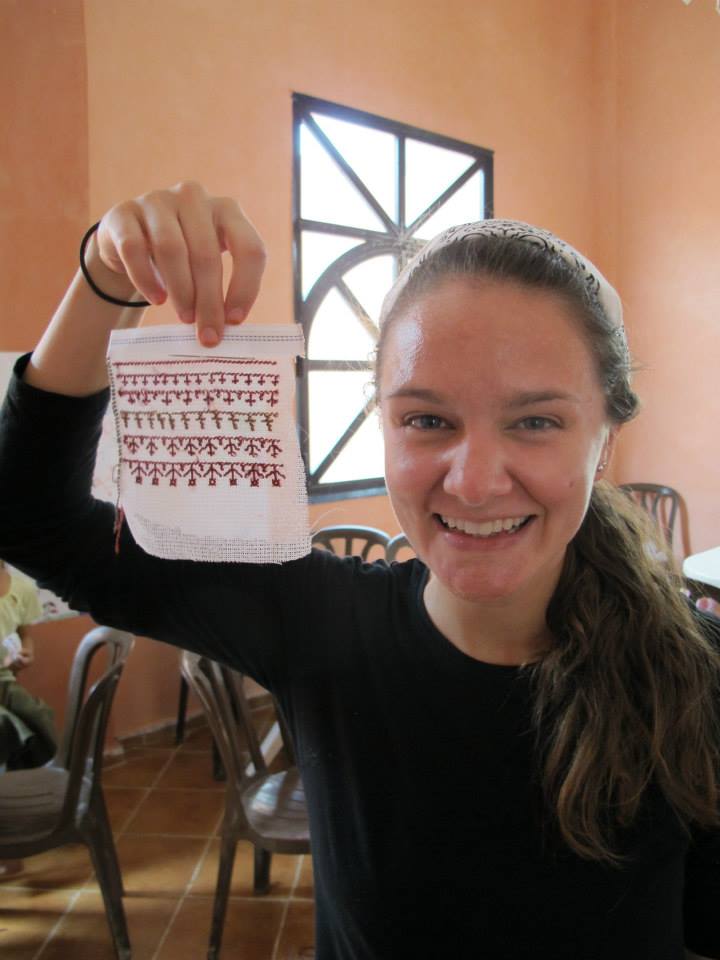
While the camp definitely benefited the campers, it was also (selfishly) a huge win for me.  It was a gift to hang out with five other female PCVs for a week and to learn from their experiences.  I had another round of msemen lessons from the ladies in the kitchen.  The artisans gave all of us PCVs lovely necklaces.  I slept on the roof and woke up to a chicken walking across my body (this goes in the win! another cool Peace Corps story! category).  I also picked up Fesi Embroidery, mostly from my 11-year-old teacher-friend.  I now have something productive to do when watching episodes of The West Wing while hiding from the sun during a long summer afternoon.  You are all getting embroidered presents from me for the rest of your life.  Okay? Okay.

This is how I looked when I started to learn how to embroider: frustrated.

Then I got myself a teacher who communicated more on my level: an 11-year-old.

Success!
Super staff!